

A Better Deal for Newfoundland and Labrador
A new agreement with Quebec and the federal government to develop Churchill Falls and Gull Island, the largest clean energy investment in North American history – delivering more power, more value, more transmission and more jobs for Newfoundland and Labrador.
A Better Deal For All of Us
More for Newfoundland and Labrador
The new deal delivers more power, more value, more transmission and more jobs.
MORE POWER to grow here at home.
The new deal gives Newfoundland and Labrador access to more electricity than the previous MOU. That means more power to support industry, attract investment and create jobs here at home.
760 MW more power overall
With the flexibility to use that power here at home or sell it to Quebec at a premium.
MORE VALUE for our resources.
The new deal delivers significantly more value to Newfoundland and Labrador from its energy resources.
$49 Billion
Total financial benefit to Newfoundland and Labrador under the new deal.
MORE TRANSMISSION to markets outside of Quebec.
Newfoundland and Labrador has secured guaranteed access through Quebec to sell electricity into other markets, including the U.S.
985 MW total guaranteed transmission
Giving the province more options for where its electricity can be sold.
MORE JOBS for Newfoundlanders and Labradorians.
The deal guarantees Newfoundland and Labrador workers a significant share of employment in Gull Island construction.
Minimum of 85% of all in person hours of employment
involved in constructing Gull Island will stay within Newfoundland and Labrador with priority being given to qualified Labrador Innu, qualified Labradorians, and qualified Newfoundlanders in that order.
NEW INVESTMENT from the Federal Government.
New federal commitments will support wind development, transmission and construction of Gull Island.
$3.5 Billion in new Federal support for Newfoundland and Labrador
through financing, grants and tax credits supporting the Labrador Wind Project, Labrador West Transmission Line, Gull Island and Churchill Falls upgrades.
LOWER ELECTRICITY BILLS for every residential ratepayer in the province.
All residential ratepayers will receive a 15% Churchill River Electricity rebate on their first 2,000 kWh of electricity use per month once the definitive agreements are finalized.
An average of $351 in savings every year
A direct annual benefit for Newfoundland and Labrador residential ratepayers.
*2026 NPV
Turning the page
New agreements have been reached with the Governments of Canada and Quebec to replace both the 1969 Churchill Falls Contract and the December 2024 MOU.
The deal advances development at Churchill Falls and Gull Island, delivering more power, more value and more transmission for the people of Newfoundland and Labrador and ensuring our province remains the primary beneficiary of its own resources.
Newfoundlanders and Labradorians must always be the primary beneficiaries of our own resources.
What's Different
The new deal improves on the previous MOU in several important ways.
Power
| 2024 MOU | New Deal |
|---|---|
1,990 MW promised to Newfoundland and Labrador. | Up to 2,350 MW from Churchill Falls and Gull Island, plus 400 MW of guaranteed output from the new 2,000 MW Churchill Falls wind project, 760 MW more power overall. |
Value
| 2024 MOU | New Deal |
|---|---|
$36 billion In nominal dollars: | $49 billion 2026 NPV, including $8.1 billion in entirely new value through agreements with Quebec and the Federal Government. In nominal dollars: |
Transmission
| 2024 MOU | New Deal |
|---|---|
No guaranteed transmission access. | 985 MW total guaranteed transmission to other markets, including the ability to transmit through Quebec to the U.S. marketplace. |
*NVP 2026
A New Federal Partnership
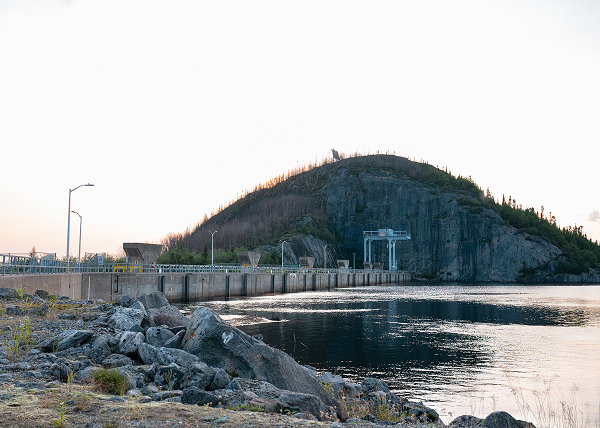
The Government of Canada is helping make the project possible. For the first time ever,
the Federal Government is partnering with Newfoundland and Labrador to help move the project forward. Federal support includes loan guarantees, investment tax credits, direct financial support for new transmission and investment in new wind power near the project site.
Federal support includes:
- Loan guarantees
- Support for new transmission
- Investment in new wind power
What This Unlocks
By advancing development at Churchill Falls and Gull Island, strengthening transmission links through Quebec and opening access to the U.S. marketplace for the first time, the agreement positions Newfoundland and Labrador as a larger contributor to Canada’s energy future while creating long-term economic benefits at home. New transmission through Labrador will also help open up new mining and other industrial projects in the Labrador trough.
Get the Facts
Simple answers to some of the biggest questions about the new agreement.
How does this MOU differ from the 2024 MOU?
- The negotiating team was mandated to negotiate a deal that gave Newfoundland and Labrador access to more power, delivered more value and guaranteed more transmission through Quebec to sell our power at market prices to other jurisdictions. This deal has secured a better deal on all three fronts:
- More power: our deal provides access 760 MW more power compared to the old MOU will be available for Newfoundland and Labrador to develop our own resources,
- More value: We have negotiated new and better pricing for our power and – through this deal will deliver at least $8.1 billion compared to the old MOU
- More transmission: We have a guaranteed portfolio of transmission total of 985 MW of transmission through Quebec to external markets, including transmission from Churchill Falls.
- It also addresses clauses of the last MOU that were highlighted by the IRC as adding significant risk to Newfoundland and Labrador, like the 2% escalator clause.
Will we still be dependent on Quebec as part of this deal?
As part of this deal, Quebec has guaranteed us almost 1000MW of transmission to external markets as part of the deal. Unlike the 1969 agreement, we will not need to sell to Quebec first at any discount, we can sell this power to external markets and keep the full revenue.
Is this a full replacement of the 2024 MOU?
This is a new deal with both the federal Government and Government of Quebec to develop Churchill Falls and Gull Island. This agreement finally turns the page on the 1969 Churchill Falls Agreement and addresses the serious flaws in the 2024 MOU that were identified by the Independent Review Committee.
Why is Newfoundland and Labrador partnering with the Government of Canada?
For the first time ever, we are including the federal government in this deal. Through negotiations, the federal government agreed to help finance new electricity transmission through Labrador, as well as to play a leading role in building 2,000 Megawatts of wind power adjacent to this hydro project.
What opportunities will this create for Newfoundlanders and Labradorians?
Part of the negotiations were ensuring the people who build these projects share directly in the opportunity they create. The development unlocked by this deal will generate a minimum of 20 million person hours of work. In addition to the work on Gull Island, we expect there will be millions of person hours of work available to build new wind power and transmission capacity.
How many jobs will go to Newfoundlanders and Labradorians?
Minimum of 85% of all person hours of work will stay within Newfoundland and Labrador, with a minimum of 20 million person hours overall, with priority being given to qualified Labrador Innu, qualified Labradorians and qualified Newfoundlanders in that order.
How is this delivering savings for Newfoundlanders and Labradorians?
Upon the finalization of the definitive agreements, the Government of Newfoundland and Labrador will introduce a 15% Churchill River Electricity Rebate for all residential ratepayers in the province on their first 2000 kWh of electricity usage per month. This will mean hundreds of dollars in savings for families across Newfoundland and Labrador.
Is Newfoundland and Labrador partnering with the Innu Nation on this deal?
The Government has committed that the Innu Nation will not lose what they gained in negotiations around the old 2024 MOU, and have already begun conversations with representatives of the Innu Nation to explore how they can be partners in this deal.
What are the next steps in turning this agreement into reality?
There is a technical and legal process underway to turn these agreements into the final binding documents. The Government of Newfoundland and Labrador and Newfoundland and Labrador Hydro will be working closely with the Governments of Quebec and Canada. It is hoped the Innu Nation will partner with us on this deal.
Why are some people saying there is no escalator built into the Churchill Falls agreement?
There is significant escalation built into the Churchill Falls agreement. Consistent with the IRC recommendations, the negotiating committee secured a simplified pricing model, with average price increases of 14 per cent per year up to 2042, followed by 2.6 per cent annual increases from 2042 to 2077 (when you consider premium tranche sales). The agreement also includes a separate inflation protection mechanism should inflation exceed expected levels.
The Independent Review Committee recommended a simpler pricing structure, citing concerns about complexity, potential disputes, and financial risk with the 2024 MOU. We followed that advice and negotiated an agreement that provides greater financial certainty and stronger outcomes for the province.
Why is Quebec quoting a different price for Churchill Falls electricity being sold to Hydro-Quebec?
Our estimate of 7.4 cents/kwh for Churchill Falls power is accurate. It is based on 2027 dollars and assumes sales at the premium rate.
While we cannot speak to Hydro-Quebec’s calculations, federal support such as the Gull Island loan guarantee and federal investment tax credits help to reduce project costs and lower the power prices. Hydro-Quebec has also stated it includes stakeholder dividends into its calculations. As a result, Hydro-Quebec appears to be presenting a subsidized rate to ratepayers.
What new transmission does this provide?
Unlike the previous MOU, Newfoundland and Labrador has negotiated multiple choices for market pricing for its Churchill Falls and Gull Island power, including Ontario, New England, and New York. Newfoundland and Labrador makes the choice.
Currently, power is sold to Hydro-Quebec at a very low contract price, Hydro-Quebec captured most of the benefits from selling into other markets, and there was limited access to other external markets.
The 2026 agreement gives Newfoundland and Labrador the option to choose amongst multiple pricing options and receive the same price as Hydro-Quebec in key export markets (transmission costs apply).
The agreement includes a 985 megawatt transmission portfolio, including 720 megawatts of market access pricing and 265 megawatts of direct transmission through Quebec.
We now have five options for power from Churchill Falls:
- Ideally, use the power in Newfoundland and Labrador to support economic development, industrial growth and future energy needs.
- Sell our Churchill Falls power to Hydro-Quebec and receive 150 per cent of the current contract price for Churchill Falls.
- Choose the New York Market via the CHPE line and receive the same market price as Hydro-Quebec, access premium electricity market pricing and a higher-value pricing than average spot market sales.
- Choose the Boston Market via the NECEC line and receive the same market price as Hydro-Quebec, access premium electricity market pricing and a higher-value pricing than average spot market sales.
- Use synthetic transmission pricing arrangements to receive pricing linked to multiple markets (three pricing opportunities).
Under the new agreement, Newfoundland and Labrador can benefit from those premium market opportunities consistent with Quebec.
Compared with both the existing contract and the 2024 MOU, the 2026 agreement provides Newfoundland and Labrador with multiple choices for market pricing, and a greater opportunity to benefit from the value of Churchill Falls and Gull Island power.
Why not wait until the Churchill Falls contract expires in 2041 before reaching a deal?
This agreement is about seizing opportunities when they are available. It provides greater value, greater certainty, and greater economic opportunity for Newfoundland and Labrador. Delaying decisions until 2041 risks losing significant financial, economic, and development opportunities that are available now. Waiting offers no guarantee.
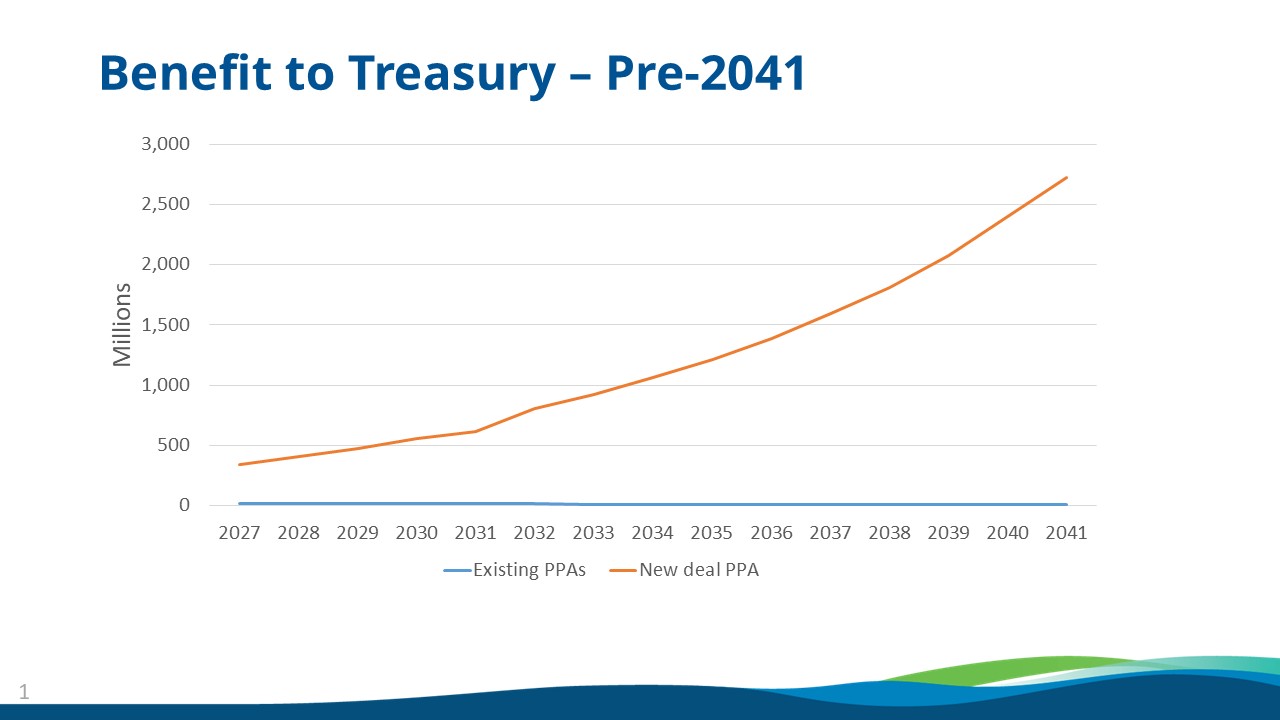
The 2026 agreement provides $10.4 billion in net present value (or $18.4 billion in nominal value) to Newfoundland and Labrador before 2041. These are revenues and economic benefits that would not be realized by simply waiting for the current contract to expire.
The 2026 agreement provides additional power in Labrador when we need it, without having to wait until 2041. This power will supply already announced opportunities such as the $8B in federal defense spending for Goose Bay or the multiple mines seeking power in Lab West. This spending will bring many jobs and economic spin-offs for the whole province.
How will this deal support economic development opportunities in Labrador?
The Churchill Falls Agreement is about creating the conditions for the next generation of mining development, attracting investment, growing good jobs, and ensuring Newfoundland and Labrador has the power, flexibility, and control needed to fully realize its world-class potential.
Access to reliable, affordable electricity is one of the most important requirements for future mining development. The Churchill Falls agreement strengthens Newfoundland and Labrador’s ability to capitalize on its resource potential by securing access to additional power.
Today, Newfoundland and Labrador Hydro has no additional power available for mining or industrial development. Greater access to electricity will help attract investment, support new mining projects, and enable value-added industrial development within the province.
This agreement gives Newfoundland and Labrador access to more power to build our economy – increasing the province’s available electricity supply to approximately 2,750 megawatts (including wind).
This additional power can be used here at home to support new industries – such as mining the hundreds of billions worth of critical minerals in the Labrador Trough, supporting economic development for decades to come.


